
Embed2Scale brings neural compression, benchmarking and embeddings to IGARSS 2026 – all open-source
At IGARSS 2026, Embed2Scale (E2S) showcased how open datasets, neural compression, reproducible benchmarking and community collaboration can help turn Earth observation embeddings into practical, scalable tools.
A full day focused on neural compression and representation learning
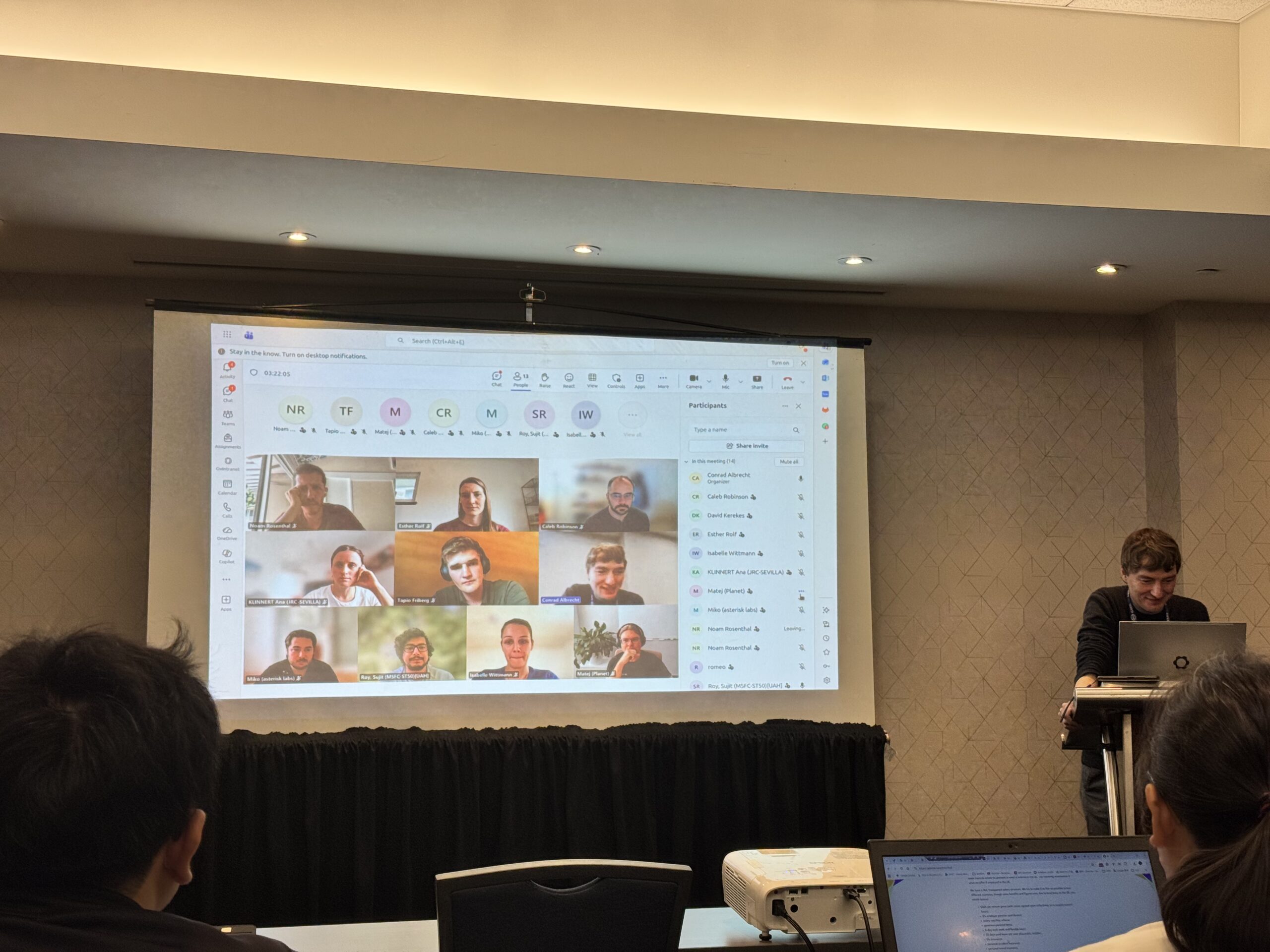
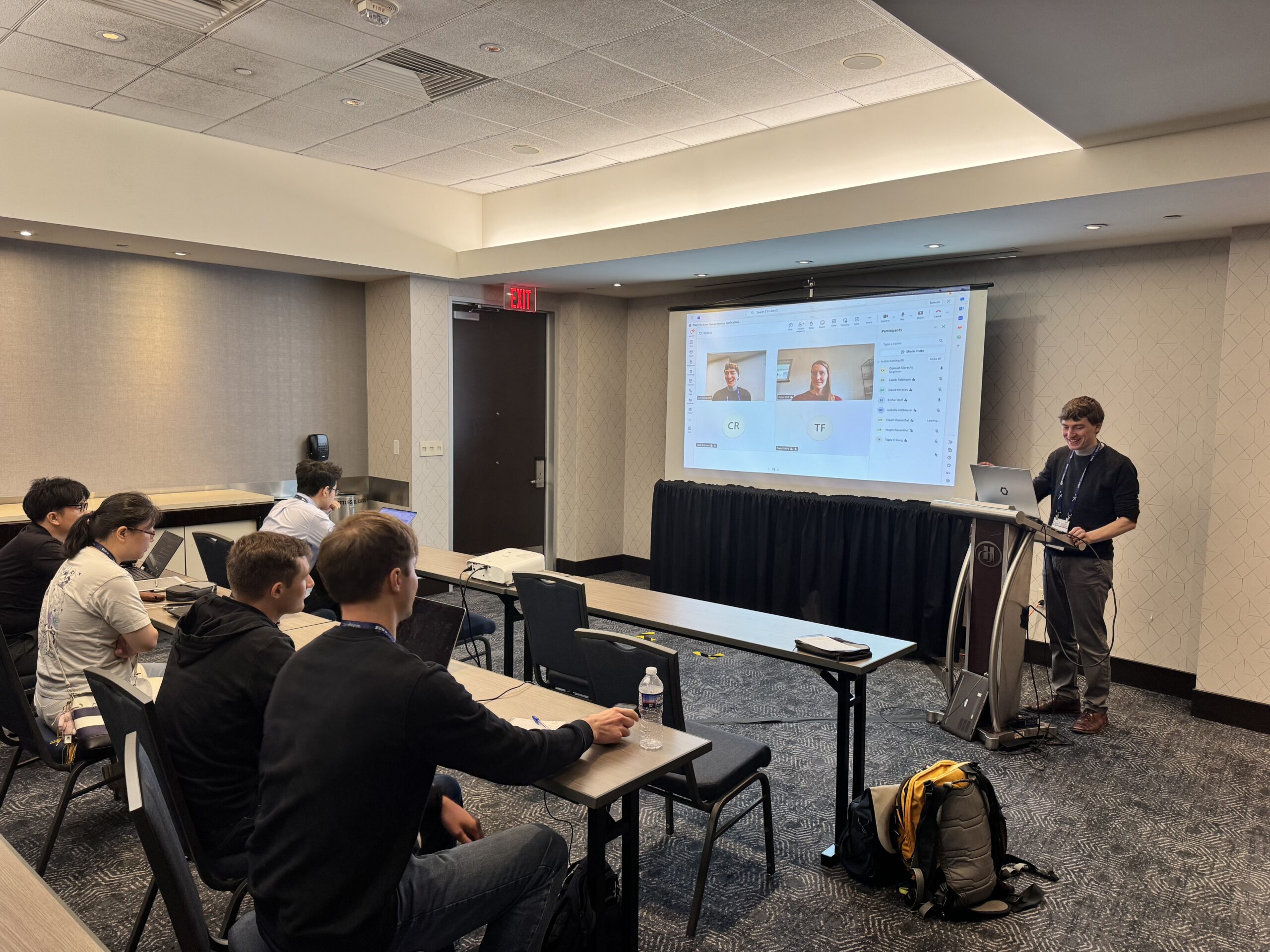
On Aug 9, Conrad M. Albrecht (University of Oxford) orchestrated the full-day tutorial “A Hands-On Introduction to Benchmarking Neural Compression and Representation Learning for Earth Observation”, in collaboration with Zirui Xu (Microsoft) and Fuxun Yu (TerraByte AI startup). The program combined theory, discussion and hands-on work: lossy neural compression and self-supervised learning; NeuCo-Bench demonstrations; practical benchmarking on the public SSL4EO-S12-downstream dataset; and coding sessions in which participants could test their own models or downstream data. NeuCo-Bench is an extensible, community-driven framework for fair and reproducible comparisons without heavy compute requirements.
Earth2Vec panel: a cross-sector conversation on what is next for neural compression
A highlight was the Earth2Vec panel, “The Future of Neural Compression: Opportunities & Challenges”, moderated by Conrad and Isabelle Wittmann (IBM). The discussion brought together voices from ICEYE, Planet/Sinergise, LGND, Microsoft, Asterisk Labs, UC Boulder, IBM, NASA ODSI/UAH, and the EU Joint Research Centre (JRC), spanning industry, startups, academia and public-sector organizations. The panel examined practical opportunities, limitations, and the questions that matter for moving from promising models toward shared standards, useful benchmarks and real-world adoption. The recording is now available through Earth2Vec.
SSL4EO-S12 v1.1: a scientific contribution to pre-train neural compression models
On Aug 14, Conrad presented “SSL4EO-S12 v1.1: A Multimodal, Multiseasonal Dataset for Pretraining, Updated” in person in the IGARSS session on multimodal foundation models for Earth observation. The updated open dataset addresses geospatial alignment and data-structure issues and provides 246,144 locations with four timestamps across multiple seasons and modalities, including Sentinel-1, Sentinel-2, NDVI, land cover and DEM, with nearly one million image patches. It is released for open research under a CC BY 4.0 license.
Open material: explore, reproduce, contribute
Embed2Scale develops methods for Earth observation and weather-data federation using AI embeddings. The Earth2Vec community, launched through Embed2Scale with academic and industry partners, provides an open space for standards, benchmarking, use cases and open-source collaboration around EO embeddings.